


WHITE PAPERS
Explore our collection of white papers covering the research and validation of Nexus iOS.
These reports present detailed testing and results that demonstrate the precision, accuracy and efficiency underpinning our digital workflow.
Full Mouth Digital Implant Impressions.
A new novel approach
Osteon Medical, White Papers, 2020
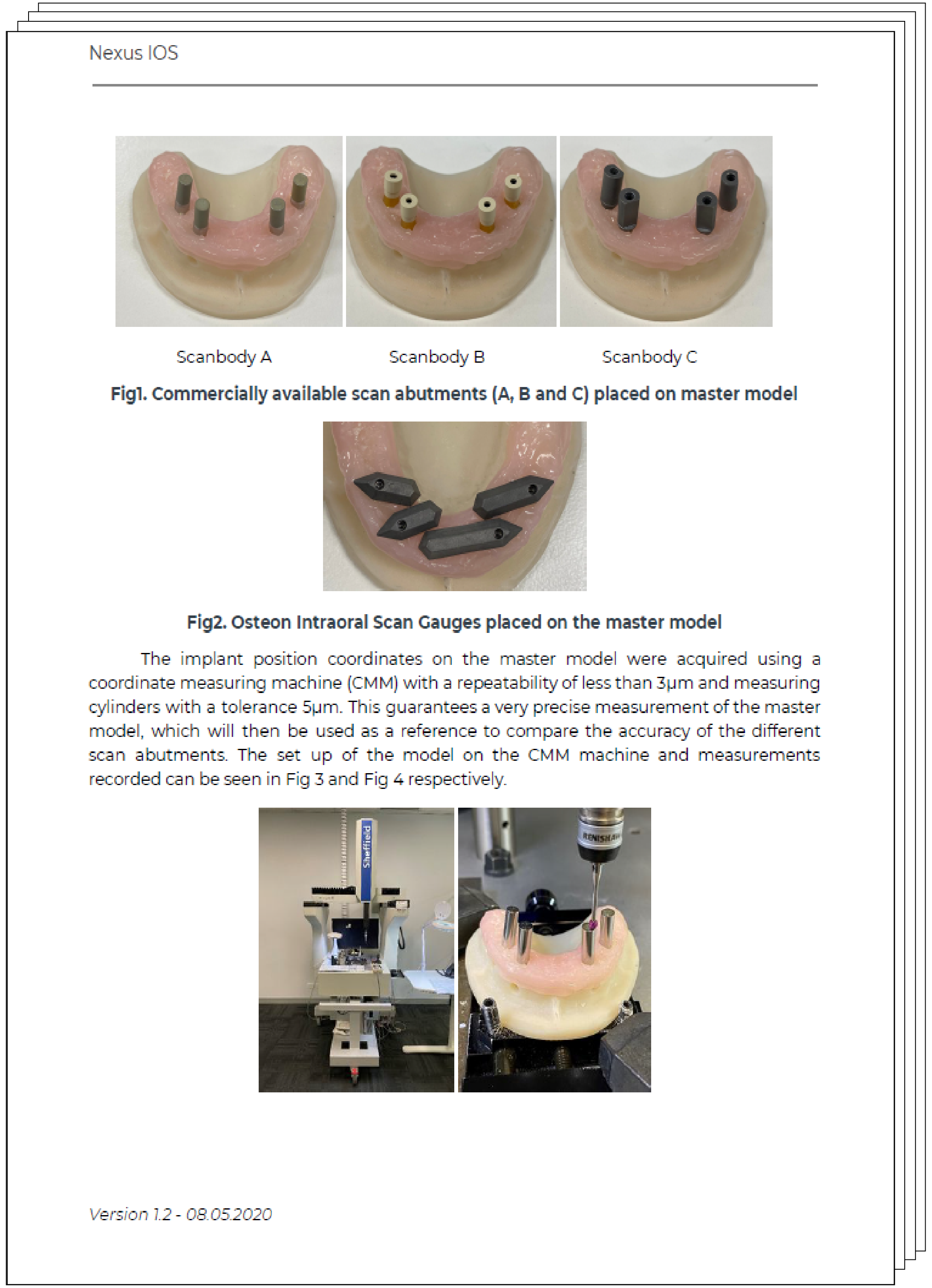
This paper’s goal was to improve full-arch digital implant impressions for edentulous patients by using a horizontal intraoral scan abutment, called a scan gauge, plus a digital scanning and alignment workflow. The background states that conventional and digital impressions both have accuracy challenges in full-arch cases and that vertical scanning abutments were not designed specifically for fully edentulous restorations.
Methodologically, the study compared commercially available scan abutments with Osteon Medical’s Nexus iOS scan gauges on a master model using a coordinate measuring machine as the reference standard. It then used three individual scans per abutment set, generated XML coordinate outputs and overlaid digital scan data with CMM data to evaluate how well the scan gauge strategy captured implant positions. The paper describes a scanning protocol that reduces scanner movement, allows correction when tolerance is off and uses a broader point-cloud alignment process to improve reference accuracy.
The result is a workflow intended to deliver more accurate digital implant impressions for fully edentulous cases and to support more accurate final prosthesis manufacturing. This study reinforces the value of validated digital workflows in supporting precise implant impressions and predictable prosthetic outcomes.
Material Testing.
Material testing compatible for provisional restorations
Osteon Medical, White Papers, 2025
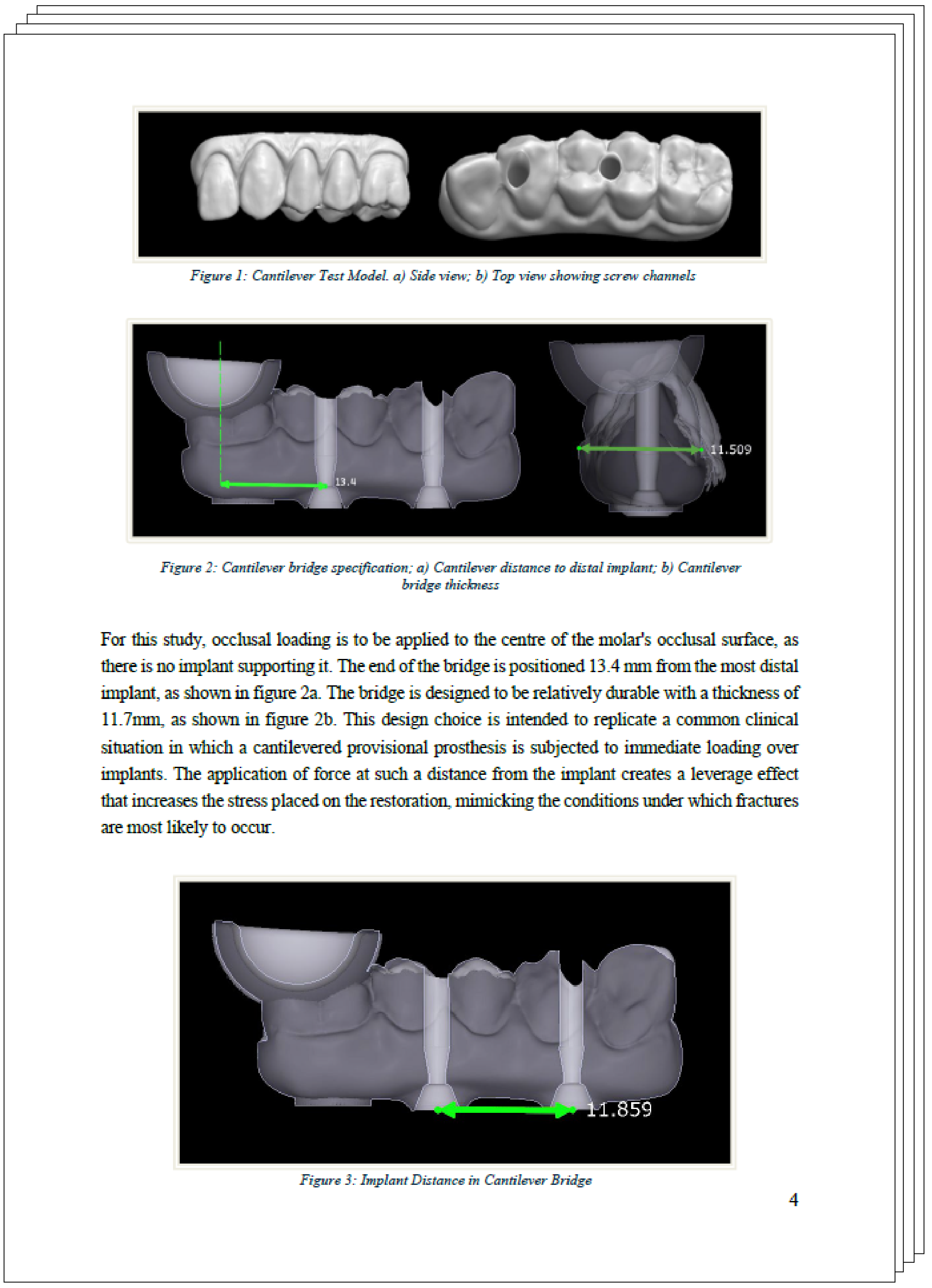
This study’s goal was to evaluate which provisional materials could best withstand applied vertical static force in two common provisional restoration designs: ti-base cemented restorations and direct-to-multi-unit restorations. The paper evaluated ceramic-filled materials, filled composites, double-crosslinked PMMA and graphene-reinforced biopolymer material to assess load-bearing performance under clinically relevant conditions
The methodology used an Exocad-designed cantilever bridge, realistic anatomical model geometry and a vertical loading test with a digital force gauge. The study ran five samples for each of seven materials and compared breakage points for both Ti-base cemented bridges and direct-to-MUA bridges compatible with Rosen screws. The strongest performer was SprintRay OnX Tough 2, which reached the highest vertical load before breakage in both bridge types, while BEGO TriniQ showed the lowest breakage points in the reported comparisons.
The study reinforces the importance of validated materials, predictable workflows and evidence-based material selection to improve provisional restoration performance. These principles align with the digitally planned, precision-driven approach of Nexus iOS and Osteon.
Direct to Multi-Unit Solution for Provisionals
Osteon Medical, White Papers, 2025
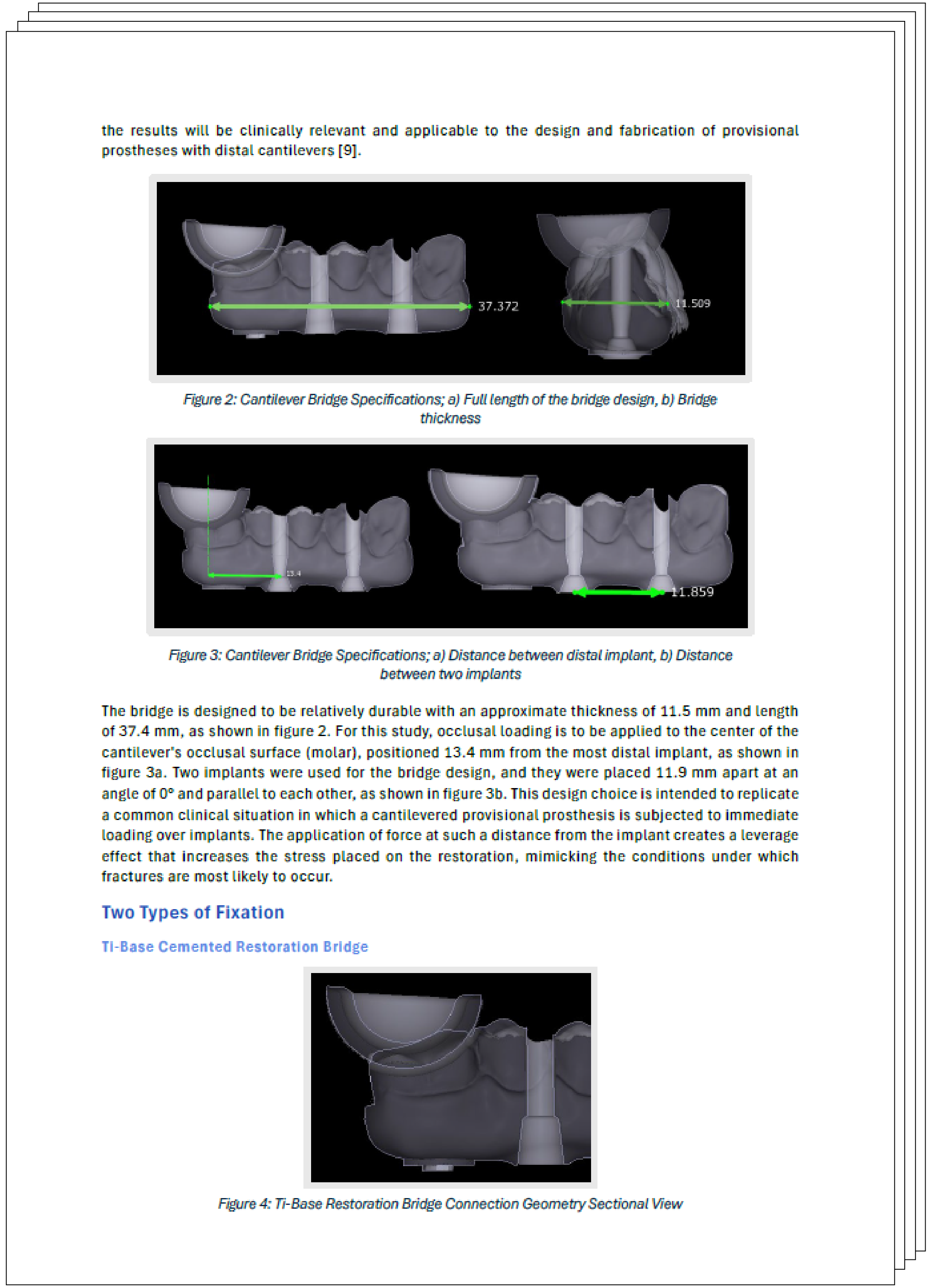
This study’s goal was to test screw-retained direct-to-multi-unit provisional restorations and compare different screw profiles under vertical load, especially in a worst-case extended-cantilever environment. The paper frames this as an alternative to Ti-base cemented restorations, arguing that removing the titanium base can simplify fabrication, reduce cost and reduce tolerance buildup while improving passive fit and stability.
The methodology used an Exocad-designed cantilever model, 3D-printed test specimens, a vertical load test with an HP-1K digital force gauge and a Solidworks FEA analysis to compare physical and simulated behavior. The study tested seven screws, including tapered and flat-seat designs, all with M1.4 thread diameter and measured how they performed in a direct-to-MUA provisional bridge. The results reported that tapered screw designs were able to distribute force better and reduce fracture risk, while flat-seated designs were more vulnerable in the restoration architecture.
The study demonstrated that direct-to-MUA provisional workflows can offer greater efficiency and mechanical reliability than Ti-base restorations when screw design is matched to the expected loading conditions.